Welcome To PCMG
The Primary Care
Metabolic Group (PCMG) is a national educational initiative providing
comprehensive metabolic disease resources. PCMG’s mission is to provide an
easily accessible repository of metabolic disease information for primary care
clinicians that includes disease management and raising standards of patient
care through the dissemination of best practices and educational information.
Therapeutic areas covered by PCMG include:
- Diabetes
- Thyroid Disease
- Lipid Disorders
- Metabolic Syndrome
- Obesity
- Osteoporosis
- Gout
- Co-morbidities of metabolic disease including cardiovascular and kidney disease
Sign up for the PCMG newsletter to receive:
- Monthly metabolic disease news articles from our partners
- Opportunities for FREE CME
- Member discounts for upcoming CME conferences and summits
Hot Topics in Primary Care
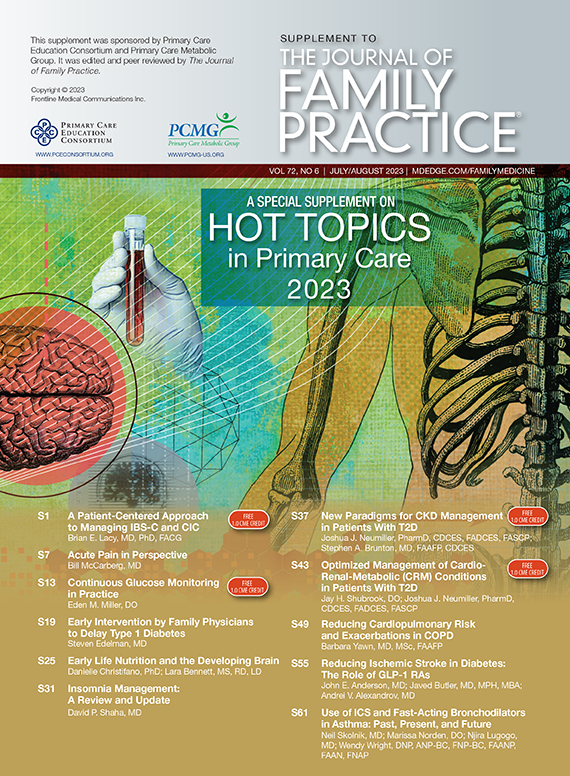
The following links are to PDFs of the individual PCMG-specific articles from the latest edition of Primary Care Education Consortium's "Hot Topics in Primary Care" supplement to the July/August 2023 issue of The Journal of Family Practice. Depending on your browser settings, the PDFs will either open in a new window, or be downloaded to your computer.
A Patient-Centered Approach to Managing IBS-C and CIC (Free CME)
Continuous Glucose Monitoring in Practice (Free CME)
Early Intervention by Family Physicians to Delay Type 1 Diabetes
New Paradigms for CKD Management in Patients with T2D (Free CME)
Optimized Management of Cardio-Renal-Metabolic (CRM) Conditions in Patients with T2D (Free CME)
Reducing Ischemic Stroke in Diabetes: The Role of GLP-1 RAs
Save the Date! Cardio Renal Metabolic/Endocrine Assembly, a virtual event November 8 & 9
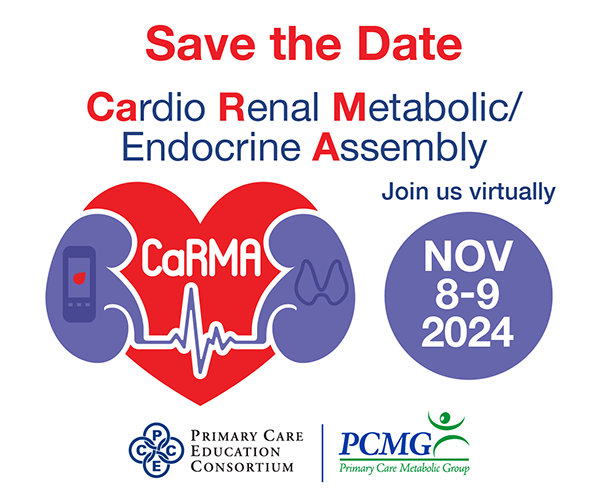
PCEC has designed CaRMA, a two-day virtual event in its inaugural year to deliver the latest clinical updates, advancements, and best practices in cardiovascular, renal, metabolic, and endocrine disease management to an audience of US-based NPs and PAs and other clinicians with an interest in these disease states.
CaRMA fills an educational gap for NPs and PAs created by the unprecedented and sudden discontinuation of the metabolic and endocrine disease summit (MEDS) previously offered to NPs and PAs in the US, attracting thousands of participants for 13 years.
Attendees who participate in CaRMA on the virtual platform will almost feel like they are at a conference in-person; the platform will have main entrance, a large lobby, supporter booths, networking sessions, and rooms dedicated to educational sessions. Participants will feel as if they are “moving” through the platform to explore different activities. PCEC hosts several virtual Summits each year, with average ratings of 4.8 out of a possible 5.
Registration will begin May 1. Visit www.carmalive.com for more details!
Meet our CaRMA Co-Chairs!
Our newest partner: Preventive Cardiovascular Nurses Association
The Preventive Cardiovascular Nurses Association is the leading nursing organization dedicated to preventing and managing cardiovascular disease.
PCNA's members are nurses and nurse practitioners that assess risk, facilitate lifestyle changes, and guide individuals to achieve treatment goals at clinics, hospitals and universities across the country.
The current state of health care demands that nurses and advanced practice nurses play a leading role in identifying and implementing cardiovascular risk reduction strategies. PCNA is committed to supporting nurses so they may successfully rise to this challenge, through the development of professional and patient education, leadership, and advocacy.
PCNA is thrilled to be holding their 30th Annual Cardiovascular Nursing Symposium in person in Orlando, FL, and virtually wherever you are April 18-20, 2024.
The 2024 Cardiovascular Nursing Symposium will continue its tradition of combining clinically relevant content presented by world-renowned and regional experts with a vibrant atmosphere that allows you to return to your practice rejuvenated and energized.
Be sure to use the promo code PCMG10PCNA to receive 10% off the event cost!
https://pcna.net/professional-development/annual-symposium/registration/
Free Resource Toolkits
Links to the latest research, clinical guidelines, patient resources, and more, some including free CME.
Common Questions on Continuous Glucose Monitoring in Primary Care
The Role and Utility of Mineralocorticoid Receptor Antagonists in Diabetic Kidney Disease
Use of SGLT-2 Inhibitors to Treat Chronic Kidney Disease in Primary Care
Helpful Links and Resources