Links to CME Activities
Brand New Content! 1.0 Credit Hours
Hyperlipidemia is predominantly screened for and managed in primary care. While primary care clinicians (PCCs) often manage patients with hyperlipidemia at risk for CV events, current approaches are suboptimal. Many patients fail to reach target LDL-C goals. PCCs lack confidence in initiating and monitoring newer nonstatin therapies such as proprotein convertase subtilisin/kexin type 9 (PCSK9) inhibitors, and Lp(a), an important marker of CV risk, is underutilized. Most patients with elevated lipid levels are identified by and primarily receive treatment from a PCC, making PCCs a critical target audience for this educational effort.
Access the webinar HERE.
CME available through 7/24/2027.

Brand New Content! 1.0 Credit Hours
T2D continues to impose a substantial clinical and public health burden, driven not only by hyperglycemia but also by its close association with obesity, cardiovascular disease, and chronic kidney disease. As treatment goals in T2D have evolved beyond glycated hemoglobin (HbA1c) reduction alone, PCCs increasingly need to make patient-centered decisions that incorporate cardio-kidney-metabolic risk, weight management, treatment tolerability, and long-term outcomes. Glucagon-like peptide-1 receptor agonist (GLP-1 RA)–based therapies, including newer oral and dual-agonist options, have expanded the opportunities to address these priorities.
Access the webinar HERE.
CME available through 7/5/2027.

1.0 Credit Hours
Resistant Hypertension (HTN) is a common condition, frequently managed in primary care. Primary care clinicians (PCCs) are often the first to identify clinical features that raise suspicions of hypercortisolism in their patients. The interconnected relationship between resistant HTN and hypercortisolism raises a critical need for primary care involvement in the identification, screening, and diagnosis of hypercortisolism in patients with HTN. There is limited familiarity with appropriate screening and diagnostic pathways for hypercortisolism in patients with HTN. As such, PCCs are a critical target audience for this educational initiative.
Access the webinar HERE.
CME available through 3/31/2027.
1.0 Credit Hours
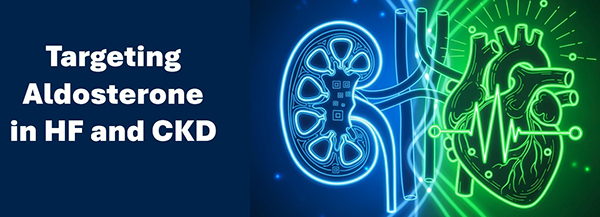
Despite advances in the management of patients with heart failure (HF) and chronic kidney disease (CKD) in recent years, significant knowledge and care gaps exist among clinicians. Novel, emerging mechanisms and therapies, such as directly targeting aldosterone in HF and CKD are less familiar to clinicians. Effective diagnosis and treatment of HF and CKD require early identification and diagnosis, implementation of evidence-based, guideline-recommended therapies, and multidisciplinary care.
Access the webinar HERE.
CME available through 12/15/2026.

Continuous Glucose Monitoring in Primary Care: From Data to Decisions
1.0 Credit Hours
Continuous Glucose Monitoring is crucial to the management of your patients with diabetes, and there are challenges with translating the resulting data into practical treatment decisions in primary care. This presentation will dive into those challenges, as well as considering what’s next in the world of CGM, and using CGM to ease the patient burden.
Access the webinar HERE.
CME available through 2/28/2027.